

What Are IVF Success Rates?
IVF success rate is a measure of how effective IVF treatment is. However, different fertility clinics may define “success rate” differently, so it’s important for patients to understand what these rates actually mean for them.
Below are some of the success rates commonly highlighted by fertility providers and frequently asked about by patients.
- Clinical Pregnancy Rate: This refers to the percentage of cycles resulting in a confirmed pregnancy.
- Live Birth Rate: This refers to the percentage of cycles resulting in a baby being born.
- Implantation Rate: This refers to the percentage of embryos that have successfully attached to the uterus.
At Sunfert, we prioritise on Implantation Rate because it reflects:
- Quality and personalised treatment for each patient
- Expertise of the embryology and scientific team
- High laboratory standards and latest techniques / technologies
Sunfert Clinical Pregnancy Rate
| Age Group | Non PGT | PGT |
|---|---|---|
| <35 | 62.3% | 59.7% |
| 35 - 37 | 53.5% | 71.7% |
| 38 - 40 | 46.3% | 67.1% |
| >41 - 42 | 17.4% | 48.2% |
| Overall | 54.8% | 64.5% |
Sunfert Clinical Implantation Rate
| Age Group | Non PGT | PGT |
|---|---|---|
| <35 | 57.9% | 60.0% |
| 35 - 37 | 47.7% | 69.9% |
| 38 - 40 | 43.3% | 66.3% |
| >41 - 42 | 11.1% | 48.2% |
| Overall | 49.5% | 63.9% |
Notes:
- The Sunfert Clinical Pregnancy Rate and Implantation Rate (success rate) shown above were calculated based on data collected at Sunfert Bangsar South in 2024.
- In patients below 35, PGT is less frequently indicated. As a result, outcomes in this group are based on a smaller sample size, which may affect the observed clinical pregnancy rate.
Why Do Success Rates Vary Between Fertility Providers?
IVF success rates can differ not only because of how “success” is defined, but also due to how they are calculated and which patients are included.
Example #1
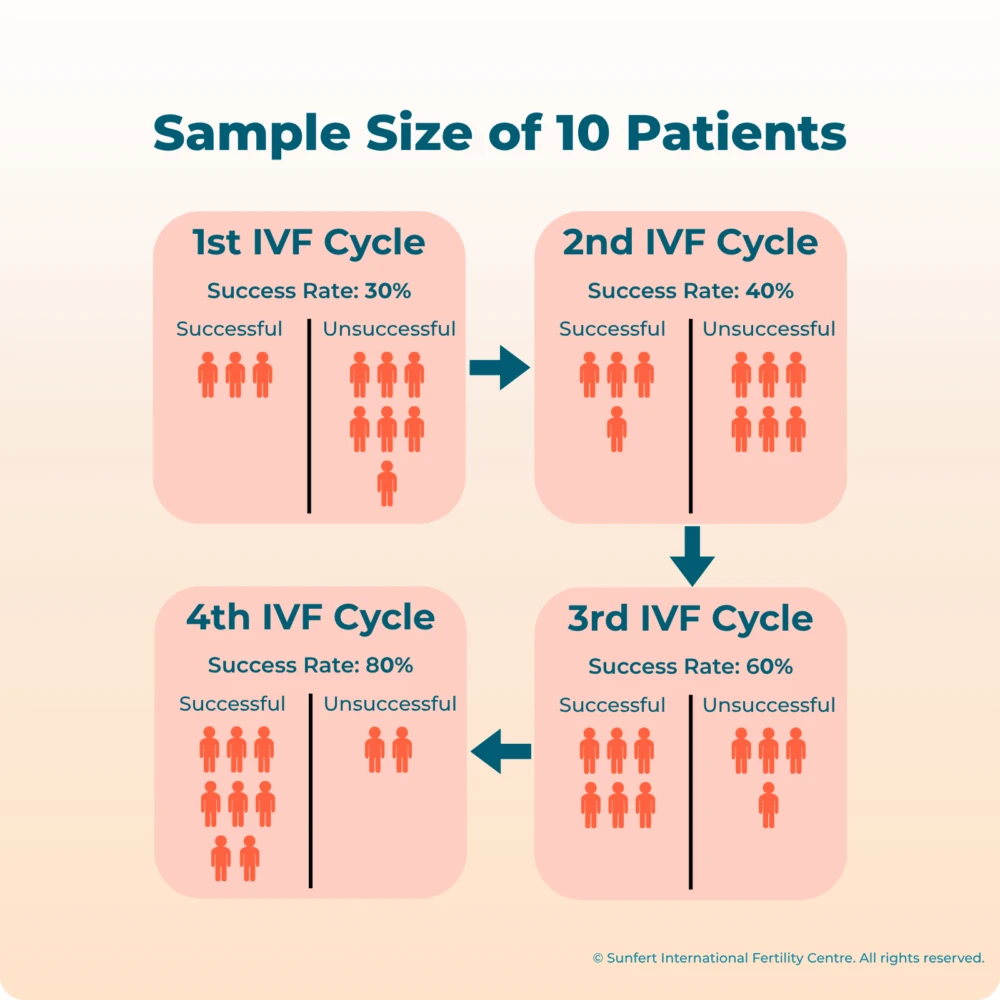
Some fertility providers use the calculation known as the cumulative success rates:
If 10 patients undergo IVF and 3 achieve pregnancy in the first cycle, the success rate is 30%.
If one additional patient succeeds in the second cycle, the cumulative success rate increases to 40%. If two more patients succeed in the third cycle, the success rate rises further to 60%.
If, in the fourth cycle, another two patients succeed, the cumulative success rate increases to 80%.
Example #2
There are also some fertility providers that may only report success rates for patients under 35, who generally have higher chances of success.
These differences in calculation and patient selection can make comparisons between fertility centres misleading unless clearly explained.
Differences in how rates are calculated and which patients are included can make fertility centre comparisons confusing and not an apples-to-apples comparison.
Example #3:
Sometimes, patients might hear of Multiple Embryo Transfer (MET), which involves placing two or more embryos into the uterus during IVF to increase the success rate.
However, MET during IVF will significantly increase the risk associated to multiple pregnancies, which poses serious health dangers to both the mother and babies, such as:
- Preterm birth
- Low birth weight
- Preeclampsia
- Gestational diabetes
- Increased infant mortality
Tip: Always ask how the centre defines and calculates its success rate, which patients are included in their calculation of the success rate, and their IVF techniques.
What are the Factors that Affect IVF Success Rate?
IVF success can be affected by various factors, such as:
- Age: Younger patients usually have higher success rates
- Egg and Sperm Quality: Directly impacts embryo health and development
- Embryo Health and Genetics: Determines implantation and pregnancy success
- Uterine and Hormonal Conditions: Supports embryo development
- Lifestyle Factors: Unhealthy habits and stress can affect outcomes
- Fertility Treatment Plan: Each patient’s fertility journey is unique, so having a personalised treatment plan from an experienced fertility specialist is important
How Success Rate Can Be Improved at Sunfert?
At Sunfert, we embrace transparency and Single Embryo Transfer (SET) technique, as we believe having a successful pregnancy is important, but having a healthy baby and ensuring the safety of the mother are more important.
In order to increase the success rate through SET, at Sunfert we provide patients with:
- Renowned Fertility Specialists: Guide patients throughout their fertility journey with personalised care
- Experienced Embryologists: Highly trained in handling and culturing embryos to ensure optimal quality and development
- Reputable Genetic Scientists: Specialists in genetic screening and embryo assessment to support healthy pregnancy outcomes
- Personalised Fertility Treatment Plans: Provided to all patients without extra charges, tailored to each couple’s unique needs
- Advanced Technologies and Lab Equipment: Continuously invest to improve IVF outcomes